



The Deadly Ultimatum


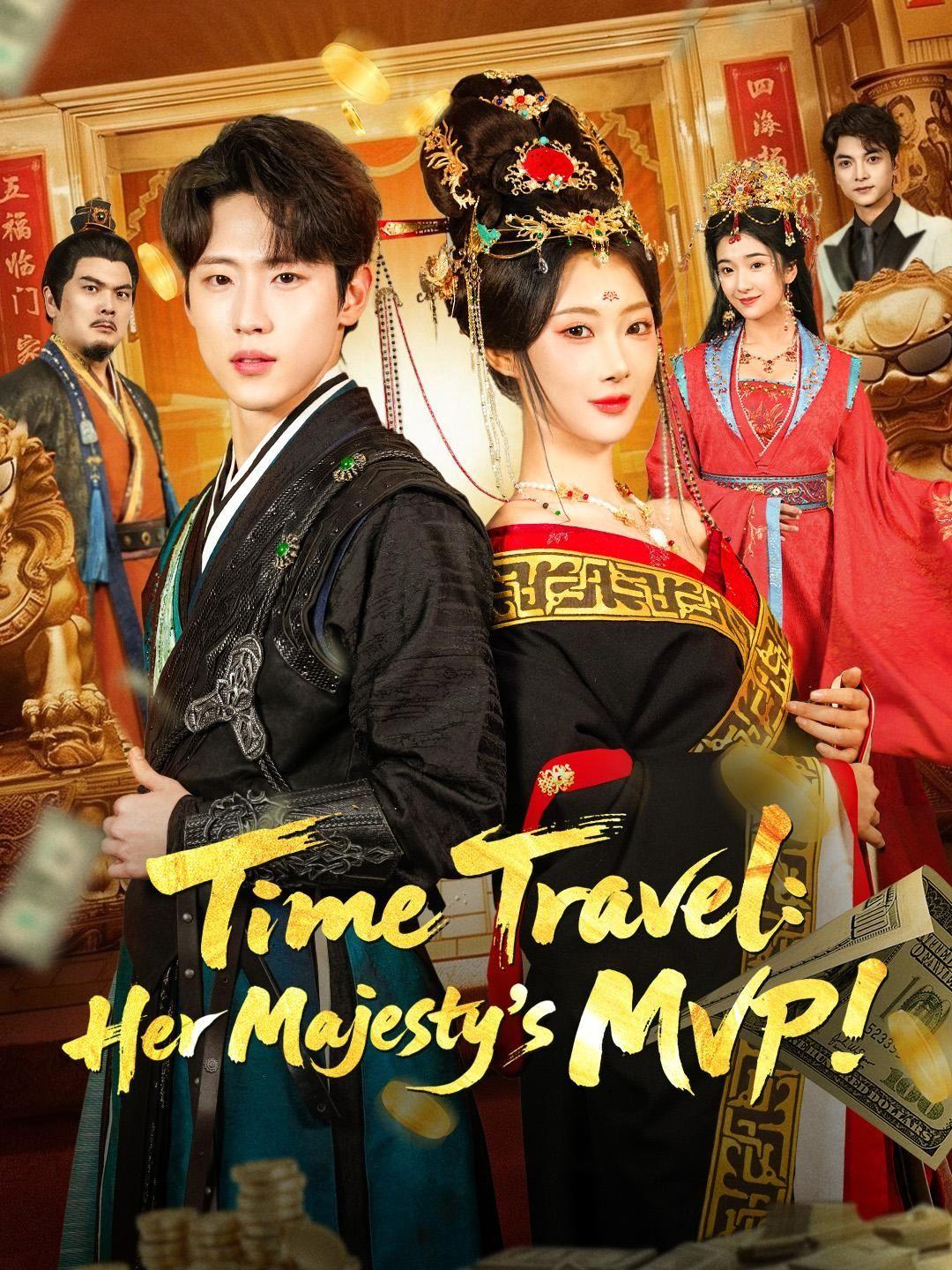
From Dumped to Billionaire Tycoon: When the Hostage Is the Host
There’s a moment—just two seconds, maybe less—where the entire moral architecture of *From Dumped to Billionaire Tycoon* collapses. Not with a bang, not with a confession, but with a sigh. Li Wei, still gripping the knife, turns his head toward Shen Yu on the couch. Not to check if he’s alive. Not to seek approval. But to *ask*, silently, *Was this worth it?* And Shen Yu, eyes still closed, exhales—long, slow, deliberate—as if answering in Morse code only Li Wei can decode. That’s when you realize: this isn’t a kidnapping. It’s a reckoning dressed as a hostage situation. And the real captive isn’t Lin Xiao. It’s Li Wei himself, shackled by loyalty, guilt, and the unbearable weight of being the ‘good guy’ in a world that stopped rewarding virtue years ago. Let’s unpack the spatial choreography first, because in *From Dumped to Billionaire Tycoon*, geography is psychology. The room is divided diagonally: the couch (Shen Yu’s domain) anchors the lower right, symbolizing passive power—control through absence. The group of four—Li Wei, Lin Xiao, Elder Chen, Zhang Tao—occupies the upper left, a cluster of active tension. Between them? Empty space. Herringbone wood, gleaming under recessed LEDs, acting as both stage and trap. When Lin Xiao stumbles back at 01:12, she doesn’t fall toward safety. She lands against the arm of the couch—*his* territory. The camera holds on her hand brushing the leather, fingers splayed, as if trying to absorb his energy, his indifference, his *presence*. She’s not escaping. She’s surrendering to the inevitable. Now consider the knife. It’s not ornate. No engravings. No gold filigree. Just stainless steel, slightly worn at the edge, the handle wrapped in black tape—DIY, functional, *personal*. This wasn’t grabbed from a drawer. It was carried. Prepared. Li Wei didn’t decide to threaten her in the moment. He’s been rehearsing this scene in his head for months. Maybe years. The way he rotates it in his palm at 00:50—casual, almost bored—reveals more than any dialogue could: he’s done this before. Not with her. But with himself. The blade is an extension of his self-loathing, sharpened by every lie he told to keep her safe, every secret he buried to protect Shen Yu’s empire. Elder Chen’s face paint isn’t decoration. It’s armor. The red lightning bolt down his forehead? That’s the mark of the ‘Third Eye Clan’, a fictional lineage referenced in earlier episodes of *From Dumped to Billionaire Tycoon*—those who see debts before they’re incurred. His eyebrows aren’t painted; they’re *etched*, each stroke precise, ritualistic. When he speaks at 00:29, his lips barely move. The words come from his diaphragm, resonating in the hollows of the room like temple bells. He doesn’t say *‘Put the knife down.’* He says, *‘You’ve already cut yourself deeper than you know.’* And Li Wei flinches—not because of the threat, but because it’s true. The real wound isn’t on Lin Xiao’s neck. It’s the scar tissue around Li Wei’s heart, built layer by layer since he chose Shen Yu’s survival over his own dignity. Zhang Tao, meanwhile, remains the silent counterweight. His teal robe is dyed with indigo and saffron—colors of balance and sacrifice. He doesn’t intervene because he *can’t*. His role isn’t enforcer; it’s witness. In episode 7 of *From Dumped to Billionaire Tycoon*, we learn he swore an oath to protect the ‘bloodline’, not the individuals within it. So he watches Li Wei’s hand tremble, watches Lin Xiao’s pupils dilate, watches Shen Yu’s chest rise and fall like a metronome—and he does nothing. Because action would break the oath. Inaction preserves it. That’s the tragedy no one talks about: sometimes, the most violent choice is to stand still. And Lin Xiao—oh, Lin Xiao. Let’s stop calling her ‘the damsel’. She’s the architect of her own captivity. Notice how she never raises her voice? How her posture stays upright, even when the knife touches her skin? That’s not bravery. It’s strategy. At 00:48, she tilts her chin *into* the blade, not away. A micro-shift, barely perceptible, but Li Wei sees it. His breath catches. Because she’s not challenging him. She’s *inviting* him to finish what he started. And in that second, the power flips. He’s no longer the aggressor. He’s the student. She’s the master. This is where *From Dumped to Billionaire Tycoon* transcends genre: it’s not about who holds the weapon. It’s about who controls the narrative. Lin Xiao knows Li Wei needs her to be the villain so he can justify his pain. So she plays the part—flawlessly—while her eyes whisper the truth: *I let you believe this was about me. It was always about you.* The couch, again. Shen Yu remains motionless, but his fingers twitch at 01:05—just once. A reflex? A signal? Or the first stirrings of consciousness? The show leaves it ambiguous, and that’s the point. His passivity is the engine of the conflict. If he sat up, spoke, *cared*, the whole dynamic would shatter. But he doesn’t. He lets them dance in his living room like marionettes strung to his silence. That’s the core irony of *From Dumped to Billionaire Tycoon*: the richest man in the room has the least agency. His wealth bought him isolation, not power. And Li Wei, the ‘dumped’ one, holds the only real leverage—the ability to disrupt the fragile equilibrium Shen Yu has spent a decade constructing. When Li Wei finally drops the knife at 01:14, it doesn’t clatter. It *lands*, soft and final, like a leaf hitting still water. He doesn’t look at Lin Xiao. He looks at his own hands—as if surprised they’re still his. The sweat on his temples isn’t from exertion. It’s from the sheer effort of *not* cutting. That’s the climax no one expected: not violence, but restraint. Not victory, but surrender. And as the camera pulls back, revealing all five figures frozen in tableau—the fallen knife, the red dress pooling on the floor, Elder Chen’s unreadable gaze, Zhang Tao’s clenched jaw, Shen Yu’s unmoving form—you realize the real question isn’t *What happens next?* It’s *Who gets to define what ‘next’ means?* *From Dumped to Billionaire Tycoon* doesn’t give answers. It gives echoes. Every line spoken lingers longer than the scene itself. Every glance carries the weight of unsaid histories. This isn’t just a drama about revenge or redemption. It’s a study in how love, when twisted by obligation, becomes the sharpest blade of all. And the most terrifying part? None of them want out. They’re addicted to the tension. Because in that suspended moment—knife at throat, breath held, world waiting—they feel *alive*. More alive than they have in years. That’s the secret the show whispers, just loud enough to unsettle: sometimes, the deepest wounds aren’t the ones that bleed. They’re the ones that keep you breathing, even when you wish you wouldn’t.
From Dumped to Billionaire Tycoon: The Knife That Never Cuts
Let’s talk about the kind of tension that doesn’t need explosions—just a trembling hand, a flicker of light on a blade, and the silence before someone breaks. In this tightly wound scene from *From Dumped to Billionaire Tycoon*, we’re not watching a heist or a courtroom drama; we’re witnessing a psychological standoff disguised as a family gathering gone rogue. The setting is opulent but sterile: polished herringbone floors, heavy wood paneling, a leather L-shaped sofa that looks more like a throne than furniture. It’s the kind of room where secrets are buried under layers of decorum—and today, one of them just cracked open. At the center stands Li Wei, the bespectacled man in the striped shirt and grey vest—the ostensible protagonist of *From Dumped to Billionaire Tycoon*, though right now he looks less like a tycoon and more like a man who just realized his life is a script he didn’t audition for. His glasses are slightly fogged at the edges, his hair damp with sweat—not from heat, but from the weight of what he’s about to do. He’s holding a knife. Not a chef’s knife. Not a ceremonial dagger. A small, serrated utility blade, the kind you’d use to open a package… unless you’re using it to threaten someone you once loved. Opposite him is Lin Xiao, the woman in the ombre red gown—dark at the top, bleeding into crimson at the hem, like a wound slowly spreading. Her earrings catch the light like shattered glass, her necklace a delicate silver teardrop that seems to pulse with every breath she takes. She doesn’t scream. She doesn’t beg. She *stares*, eyes wide not with fear, but with disbelief—as if she’s trying to reconcile the man before her with the one who held her hand through chemotherapy three years ago. That’s the genius of this scene: it’s not about violence. It’s about betrayal so intimate it feels like self-mutilation. Behind them, the others form a tableau of moral ambiguity. Elder Chen, with his silver mullet and face paint—a jagged red lightning bolt splitting his brow, flanked by swirling black ink over his eyelids—doesn’t move. He watches Li Wei like a priest observing a sacrificial rite. His robes are black, edged in brocade orange, traditional yet theatrical, suggesting he’s not just a relative—he’s a keeper of old codes, maybe even a cult figure masked as a patriarch. When he speaks, his voice is low, gravelly, each word landing like a stone dropped into still water. He says nothing overtly threatening, yet his presence alone makes the air heavier. You can almost hear the unspoken line: *You think this is your choice? It was made long before you were born.* Then there’s Zhang Tao, the man in the teal robe with the shaved sides and the chain necklace—modern aesthetics draped over ancient discipline. He holds a katana sheathed at his hip, but he never draws it. His role isn’t to act, but to *witness*. He blinks slowly, lips pressed thin, as if measuring how much truth Li Wei can bear before he snaps. And snap he does—briefly. At 00:52, Li Wei presses the blade to Lin Xiao’s throat. Not deep. Just enough to make the skin dimple. Her breath hitches. A single tear escapes, tracing a path past her kohl-lined eye. But here’s the twist: Li Wei’s hand shakes. Not from weakness—but from hesitation. He *wants* to cut. He *needs* to prove something. Yet his wrist betrays him. That’s when the real horror begins: he’s not punishing her. He’s punishing himself for still loving her. Cut to the couch. There, sprawled like a discarded puppet, lies Shen Yu—the so-called ‘billionaire’ of the title, though right now he looks more like a corpse staged for a crime scene. Eyes closed. Mouth slack. One hand resting limply on the armrest, a silver ring glinting under the recessed lighting. Is he unconscious? Drugged? Or simply refusing to engage with the chaos he helped create? His black silk shirt is immaculate, his belt tight, his posture unnervingly composed for a man supposedly at the mercy of fate. This is where *From Dumped to Billionaire Tycoon* reveals its true structure: it’s not linear. It’s cyclical. Shen Yu isn’t the victim here—he’s the fulcrum. Every character orbits him, their motives warped by his absence, his wealth, his silence. The camera lingers on details: the way Lin Xiao’s fingers curl inward, not in fear, but in calculation; how Li Wei’s watch strap digs into his wrist as he tightens his grip on the knife; how Elder Chen’s left eyebrow twitches whenever someone mentions the ‘old debt’. These aren’t filler shots. They’re clues. The show’s writers have embedded a whole mythology in micro-expressions. When Li Wei finally lowers the knife at 01:13, it’s not because he’s been persuaded—it’s because he saw something in Lin Xiao’s eyes that undid him: recognition. Not of guilt, but of shared trauma. She knows what he did to protect her. And that knowledge is more dangerous than any blade. What makes *From Dumped to Billionaire Tycoon* stand out isn’t its plot twists—it’s its refusal to let characters off the hook. No redemption arcs served warm. No last-minute saves. Just raw, uncomfortable humanity. Li Wei doesn’t become a hero when he spares her. He becomes more tragic. Because now he has to live with the fact that he *could* have done it—and part of him still wants to. Lin Xiao doesn’t forgive him. She simply stops looking at him like a lover, and starts seeing him like a mirror. And Elder Chen? He smiles. Not kindly. Not cruelly. Just… satisfied. As if the ritual has been completed, and the next phase can begin. The final shot—Li Wei standing alone, knife dangling from his fingers, the others frozen behind him like statues in a forgotten temple—says everything. This isn’t the climax. It’s the calm before the real storm. Because in *From Dumped to Billionaire Tycoon*, power doesn’t come from money or titles. It comes from who you’re willing to hurt… and who you’re still afraid to become. And if you think Lin Xiao’s red dress was just fashion? Think again. It’s a warning. A signal flare. A promise written in silk and blood. The show doesn’t shout its themes. It lets them bleed through the cracks in the floorboards, the tremor in a handshake, the way a man looks at a woman he ruined—and still can’t walk away from.